

A real-life transformation journey from construction to fintech with mentorship and guidance from GoCrackIt.
Read MoreWhy Private Equity Loves Cricket: Deep Dive Into CVC Capital’s ₹5,625 Crore Investment in Gujarat Titans
- Dec 03, 2025
- Private Equity
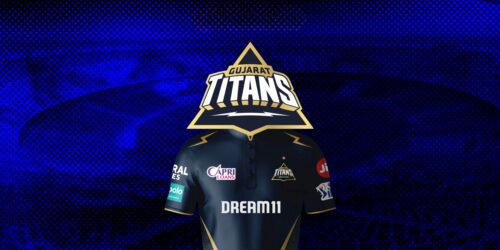
IPL, Cricket and Businesses
According to Houlihan Lokey’s 2025 report, IPL is valued at US$18.5 billion (₹1.56 lakh crore). BCCI’s financial report for FY 2023–24 shows Total revenue: ₹9,741.7 crore and IPL contribution: ₹5,761 crore (≈59%).
The IPL has evolved into one of the world’s most valuable sports leagues, transforming cricket into a global commercial powerhouse. Since its launch in 2008, it has built a multibillion-dollar ecosystem driven by premium media rights, strong sponsorship demand, and a franchise model that yields predictable, long-term cash flows. The 2025 season highlighted the league’s operational resilience, successfully navigating geopolitical disruptions through strong planning and stakeholder coordination. It also showcased emerging cricketing talent, reinforcing the IPL’s role as a talent incubator for global cricket.
From an investor perspective, the IPL offers rare financial stability within global sports. Top franchises generate ₹6,500–7,000 million in annual revenue with high visibility, thanks to BCCI’s long-term media deals. A fixed salary cap (₹1,200 million) protects margins, while minimal infrastructure obligations create an asset-light model with high return on capital. Compared to leagues like the EPL or NBA, IPL teams face far lower operating costs and enjoy leveraged upside through brand expansion. IPL represents a high-yield multi-asset class with diversified risks and a catalyst for cricket’s global transformation.
IPL Team | Owner(s) / Franchise Holder |
Chennai Super Kings (CSK) | Chennai Super Kings Cricket Ltd. / India Cements (controlled by N. Srinivasan) |
Mumbai Indians (MI) | Indiawin Sports Pvt. Ltd. (Reliance Industries — Ambani family) |
Royal Challengers Bengaluru (RCB) | United Spirits Ltd. (Diageo/United Spirits ownership) |
Kolkata Knight Riders (KKR) | Knight Riders Sports Pvt. Ltd. (Shah Rukh Khan’s Red Chillies Entertainment + Mehta Group) |
Sunrisers Hyderabad (SRH) | Sun TV Network (Kalanithi Maran / Sun Group) |
Delhi Capitals (DC) | Joint owners: GMR Group & JSW Sports (JSW Group) |
Rajasthan Royals (RR) | Emerging Media IPL Ltd. / Rajasthan Royals ownership consortium (major investor Manoj Badale et al.) |
Punjab Kings (PBKS) | KPH Dream Cricket Pvt. Ltd. (consortium including Preity Zinta, Ness Wadia, Mohit Burman, Karan Paul) |
Gujarat Titans (GT) | Torrent Group — majority owner (67%); CVC Capital Partners — minority owner (33%) |
Lucknow Super Giants (LSG) | RPSG Group (Sanjiv Goenka) |
Why do Businesses invest in IPL?
Guaranteed, Contracted Cash Flows (Central Revenue Pool)
Every IPL franchise receives a fixed share of BCCI’s central revenue, which comes from:
- Broadcasting rights
- Digital streaming rights
- Title sponsorships
- League-wide sponsorships
This money is contractually locked for 5–10 years and grows every cycle. Broadcast + central sponsorship revenue per team annually ≈ ₹280–350 crore. Operating costs for most teams ≈ ₹120–170 crores. Teams reliably make money every year before team-level sponsorships. This kind of predictable cash flow is rare in sports globally or even in businesses.
Trophy Assets — High Appreciation, Low Correlation
Sports franchises worldwide behave like rare assets:
- High barriers to entry
- Scarce supply (only 10 IPL teams)
- Strong emotional demand from billionaires & corporations
This creates perpetual upward price momentum.
Soft Power + Brand Building - Hedge Against Traditional Branding
Brands are shifting away from TV ads, Billboards, Generic sponsorships. Owning an IPL team gives them
- Guaranteed visibility
- Youth demographic access
- Influencer-driven commerce
- Built-in storytelling
- A 40-million+ follower digital asset (for top teams)
This is cheaper and more durable than renting advertising slots. IPL teams let owners build brand equity with unparalleled national visibility. Reliance uses Mumbai Indians to push Jio & retail brands. RPSG uses LSG to enhance brand recall in UP — their largest market.
IPL is actually a Media Product, where the real business is Advertising, Digital rights, Fantasy gaming integration, Content & OTT, Stadium rights, Event production, Data and fan analytics
Why did CVC Capital invest in Gujarat Titans?
CVC Capital Partners, headquartered in Luxembourg, is one of the world’s largest private-equity and alternatives firms, managing more than €200 billion across buyouts, credit, secondaries, and infrastructure. Its investment strategy spans a wide range of sectors — including Building & Construction, Business Services, Chemicals, Consumer/Retail, Energy, Financial Services, Healthcare, Manufacturing, Technology, Transportation/Infrastructure, Utilities, and a fast-growing focus on Sports, Media & Entertainment. CVC’s sports thesis is centred on monetising premium intellectual property, scaling leagues, and unlocking commercial revenue in under-professionalised sports. Its global sports portfolio includes stakes in La Liga, Six Nations Rugby, Volleyball World, women’s tennis, and cricket through the Gujarat Titans. Recent disclosures suggest CVC’s sports assets are valued at roughly US$13–14 billion — about 6–7% of its total AUM — making it one of the most significant institutional investors in global sports. CVC’s model blends commercialisation, governance discipline, and long-term value creation across world-class sports properties.
CVC Capital acquired the Gujarat Titans franchise in October 2021 during the BCCI auction for two new IPL teams. Competing against bidders including Adani Group and Torrent Group, CVC won the Ahmedabad franchise rights with a bid of ₹5,625 crore, one of the highest franchise valuations in global cricket. The payment structure, like other new IPL teams, was designed as a 10-year staggered payout rather than an upfront lump-sum, reducing capital strain while securing long-term ownership. CVC operated the team through its investment vehicle, Irelia Sports, building the franchise from scratch—branding, leadership, player strategy and commercial partnerships—before steering it to immediate on-field success and strong financial value creation.
After acquisition, GT quickly became one of the successful franchises: it won the debut season (2022) and reached the final again in 2023
In early 2025, CVC Capital sold a 67% majority stake in Gujarat Titans to Torrent Group, valuing the franchise at roughly ₹7,500 crore. CVC received about ₹5,000 crore in cash while retaining a 33% minority stake, allowing continued participation in future upside.
The returns for the deal can be calculated as below :
Gains | |
Cash Component from Torrent | 5025 |
Stake Value for remaining 33% (on paper) | 2475 |
Total (A) | 7500 |
Investments | |
4 Years Franchise Fees Paid to BCCI Investment | 2250 |
4 year – Expenses | 1800 |
Deal Revenue to BCCI | 251 |
Total (B) | 4301 |
Returns (A-B) | |
Absolute Returns (C) | 3199 |
Return on Investment (C/B *100%) | 74.38% |
Annualised Return | 14.90% |
Takeaways — What This Means for PE, Sports and Indian Markets
- Validation of Sports as Asset Class: CVC’s entry and exit underscores that sports franchises — in fast-growing markets like India — can be legitimate PE-class investments, combining brand value, media rights, fan monetization, sponsorships.
- Rising Commercialization of IPL: The ability to sell a team at a higher valuation, just a few years after buying, shows the commercial growth trajectory of IPL is still strong. The value created comes not just from on-field success, but brand-building, sponsorship deals, media rights, and league-wide growth.
- PE exit strategies in sports: CVC’s partial exit (selling majority but retaining minority) could become a template — enabling funds to de-risk while preserving upside; other funds or firms might replicate this when investing in sports franchises, T-20 leagues, etc.
- Impact on Ownership Patterns in IPL: Traditional corporate conglomerates (like Torrent) may increasingly become owners rather than celebrities or film-business-backed owners; a shift toward “business-oriented ownership” might influence how franchises are run, monetized, and valued.
- Cautious optimism given macro headwinds: While past few years saw rapid growth, the broader IPL ecosystem has shown signs of correction: for instance, the overall IPL valuation reportedly fell in 2025 (post media-rights consolidation, regulatory changes around gaming ads) — meaning future returns may be more conservative.
Get More Insights

Mastering Risk Management: A Guide for MBA Students and Professionals
A practical guide to mastering risk management for MBA students and professionals in business and finance.
Read More
Leveraging Structured Thinking in Career Transitions
Use structured thinking to navigate career transitions with clarity, confidence, and actionable steps.
Read MoreQUICK LINKS
- Home
- About
- Career Conversations
- Resume Reviews
- Mock Interviews
POLICIES
- Terms & Conditions
- Privacy Policy
- Refund Policy
CONTACT
- +91-81485-89887
- support@gocrackit.com
- #518, Ground Floor, 10th Cross, Mico Layout, BTM 2nd Stage, Bangalore - 560076